Manufacture of lemon balm essential oil
Karina-Agro Ltd. manufactures lemon balm essential oil in its own essential oils distillation plant. The entire process of crop cultivation and raw material processing is fully automated from the harvesting of the plants to the extraction of the essential oil using high-performance machines.
Lemon balm has been known and widely used as an essential oil and medicinal plant for centuries. Its dried leaves contain up to 0.1% of essential oil that has a lemon aroma due to its content of citral and citronellol aldehyde. Furthermore, the leaves of the lemon balm contain up to 4% tannin, glycosides, saponin acid, bitter substances, resins, slime and other as of yet insufficiently studied ingredients.
The lemon balm essential oil is used in the perfume, food and pharmaceutical industries, as well as for the production of herbal liqueurs such as Chartreuse liqueur.
Due to its content of the listed ingredients, the leaves and tender stems of lemon balm have a spasmolytic effect, regulate the activity of the digestive system and calm the nervous system. They are used in medicine for the preparation of healing herbal teas, infusions, etc.
Melissa is a thermophilic Mediterranean essential oil and medicinal plant. It is native to the Mediterranean region of Europe, but as a wild plant it is still found in the countries of the Middle East (Syria). It is cultivated in many European countries, in Asia, Africa and North America.
Lemon balm grows wild throughout Bulgaria, with its natural habitats concentrated mainly in the forest regions. It is often planted in gardens and at apiaries as a melliferous plant.
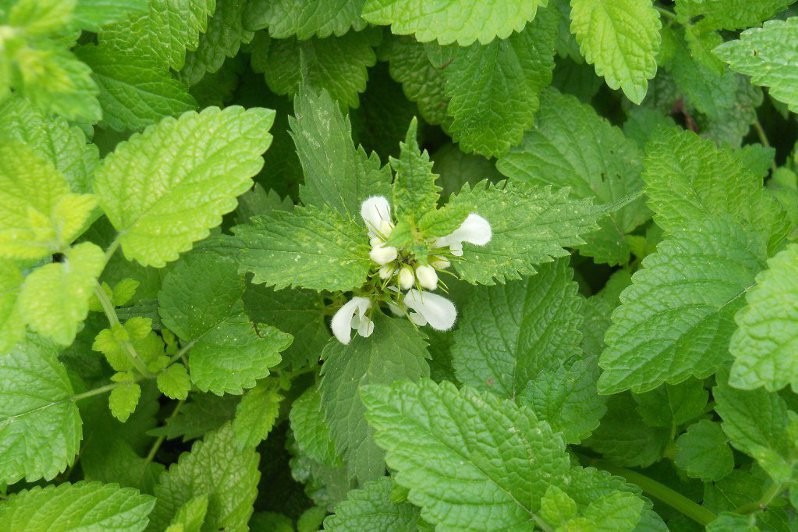
Lemon balm (Melissa officinalis) is a perennial herbaceous plant of the Lamiaceae family.
The root system of the plant is highly branched, bearded and lying at a relatively shallow depth. The main root is dark brown and the lateral roots are brownish. The roots grow from the lowest stem nodes.
The stems are highly branched, square-sectioned, and grow to a height of up to 1 m. The lateral branches are green and form from the buds arranged opposite the nodes of the stems.
During the second half of the vegetative period of the lemon balm, rhizomes are formed by the lower buds of the stems, which have a surface-growing and subterranean part as in mint.
The leaves are arranged opposite each other on the buds of the stems. They have an ovate shape, dark green on the upper surface and gray-green and furred on the undersurface.
The leaf margin is serrated. The lower leaves are larger and with longer petioles, while the upper leaves have smaller and shorter stems. The vein of the upper surface of the leaves is deeply inwardly arched, so the leaf blades appear rough.
The flowers are clustered in groups of 3 to 5, arranged in the axils of the upper leaves. The chalices resemble a bell, they are upright and have 13 longitudinal ribs. The corolla is double-lipped, funnel-shaped and longer than the calyx. The upper lip is two-partite and the lower one – three-partite, with a wider middle part. During the flowering period the color of the corolla changes from yellow to white or pale reddish. The stamens are patent.
The seeds are oblong, dark brown to black nuts.


You May Also Like
Manufacture of garden sage essential oil
Manufacture of chamomile essential oil